In this article
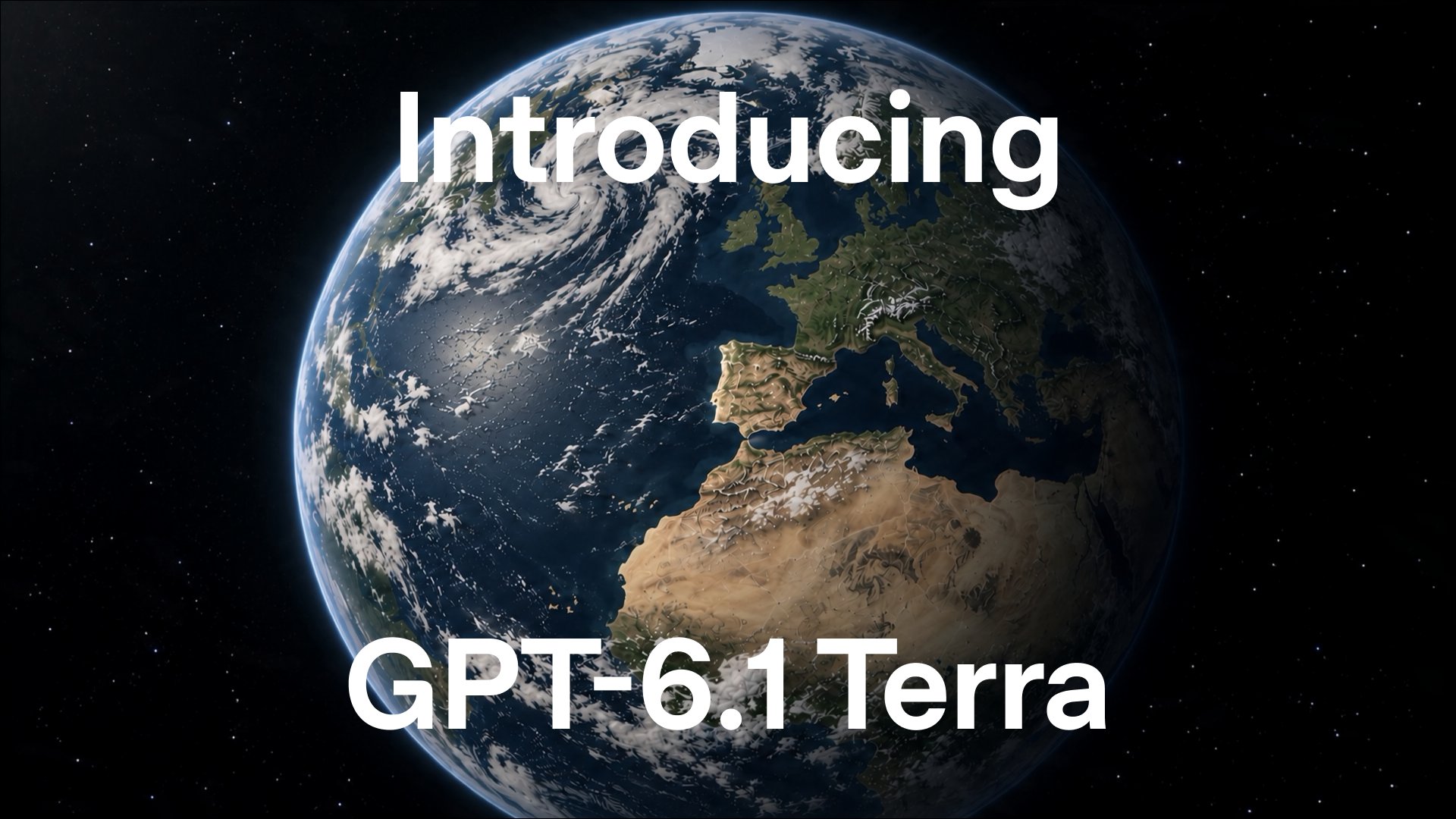
TL;DR: OpenAI released GPT-6.1 Terra on October 26, 2026. It’s a model for computer use, image understanding and writing, and it’s available in the API as gpt-6.1-terra. Standard API prices are $1 per million input tokens and $5 per million output tokens, against $2 and $12 for GPT-5.6 Terra. It’s rolling out in ChatGPT and Codex, and GitHub made it generally available in Copilot the same day. If you run GPT-5.6 Terra in production, compare the two on your own tasks before you switch.
What happened
OpenAI announced GPT-6.1 Terra on October 26, describing it in its news feed as “bringing fast and capable computer use to everyone.” Its API docs describe it as “a fast, efficient model for visual reasoning, precise computer use, and clear, natural writing.” The examples OpenAI lists are matching product photos to catalog entries, reading technical drawings, acting on application screens, and drafting and revising text.
Where you can use it:
- ChatGPT and Codex. OpenAI said on X that it is “rolling out now and is available to all Plus, Pro, Enterprise, and Edu users in ChatGPT Work and Codex.” OpenAI’s post doesn’t mention the Business plan.
- The OpenAI API. The model ID is
gpt-6.1-terra. It works with the Responses, Chat Completions and Batch APIs. It doesn’t support the Realtime API, the Assistants API, fine-tuning or predicted outputs. - GitHub Copilot. GitHub’s changelog says it is generally available for Copilot Pro, Pro+, Max, Business and Enterprise, rolling out gradually. It’s billed at the provider’s list price under usage-based billing. On Business and Enterprise plans, new models are switched on automatically unless an admin has turned off default enablement or blocked this model in the model policy.
- Vercel AI Gateway. Vercel lists it as
openai/gpt-6.1-terra, plusopenai/gpt-6.1-terra-fastfor fast mode. - Amazon Bedrock. AWS made it generally available on Bedrock on October 26. You can call it through the Bedrock APIs, or set up ChatGPT Work and Codex to use the model on Bedrock. AWS lists up to 1 million input tokens with text and image input, and points to the Bedrock docs for supported regions and pricing, so check those before you assume OpenAI’s API prices apply.
What OpenAI’s model page lists:
- Text and image input, text output. No audio or video.
- A 1,050,000-token context window: up to 922,000 tokens in and 128,000 tokens out.
- A knowledge cutoff of June 1, 2026. GPT-5.6 Terra’s is February 16, 2026.
- Reasoning effort settings from
nonetomax, withmediumas the default. - Tools including computer use, web search, file search, MCP, a hosted shell and code interpreter. Tool calling needs the Responses API.
OpenAI also makes performance claims. It says GPT-6.1 Terra “substantially outperforms” GPT-5.6 Terra on its Agents’ Last Exam benchmark, matches GPT-6 Astra “at one-tenth the price per token,” and finishes tasks over three times faster on average than both GPT-6 Astra and GPT-6.1 Sol. These are OpenAI’s own results. We haven’t seen independent tests yet.
Why it matters
For most small teams, the news is the price. Here are OpenAI’s standard API prices per million tokens:
| Model | Input | Cached input | Output |
|---|---|---|---|
| GPT-6.1 Terra | $1.00 | $0.05 | $5.00 |
| GPT-5.6 Terra | $2.00 | $0.20 | $12.00 |
Input costs half as much, and output costs 58% less. As a rough example of our own, take 10,000 invoices a month at about 3,000 input tokens and 500 output tokens each. That comes to about $55 on GPT-6.1 Terra, against about $120 on GPT-5.6 Terra, before caching or Batch discounts. Reasoning tokens are billed as output, so a higher effort setting raises the real figure.
A few pricing details to check before you budget:
- Long prompts cost more. Once a request goes over 272,000 input tokens, the whole request is billed at 2x for input and cache, and 1.5x for output. That’s $2 in and $7.50 out per million tokens.
- Writing to the cache has a price. A 30-minute cache write costs $1.25 per million tokens, and a 12-hour write costs $2.50. We explained when longer prompt caching pays off on October 21.
- Other modes change the rate. Batch and Flex cost 50% less. Fast mode costs 2x the standard price. Regional processing adds 10%.
The computer-use focus matters too. Filling in forms, copying invoice data into accounting software and working through screens in older web apps are the jobs small businesses most often want to hand to an agent. Cheaper, faster calls make those runs easier to justify. You still need to check the results before anything touches money or customers.
For Copilot users on usage-based billing, GitHub describes GPT-6.1 Terra as costing less than GPT-6.1 Sol for “everyday agentic coding and terminal work.” If you manage a Copilot Business or Enterprise org, it will usually appear for your users automatically, so check your model policy if you want to control who uses it. We covered the models GitHub removed from Copilot earlier this month.
What to do now
- Test it on your real work first. OpenAI’s migration guide says to compare GPT-6.1 Terra with GPT-5.6 Terra at the same reasoning effort on representative images and workflows. Twenty to fifty of your own past jobs, where you already know the right answer, make a good test set.
- Move tool calls to the Responses API. If your app calls tools through Chat Completions, OpenAI says to migrate to Responses before you switch models.
- Keep long prompts under 272,000 tokens where you can. Above that, the whole request is billed at the higher long-context rate.
- Use the exact model ID. Put
gpt-6.1-terrain code once you’ve tested it. It’s the only ID OpenAI lists for this model so far, with no dated snapshot to lock to, so watch OpenAI’s changelog for updates. - Copilot admins: check your model policy. Under default enablement, GPT-6.1 Terra turns on automatically, so block it or keep it on deliberately, and watch usage-based billing for the first few weeks.
Updates
- Oct 27, 2026, 4:14 p.m. Manila: Added that GPT-6.1 Terra is generally available on Amazon Bedrock, per AWS’s October 26 announcement.
- Oct 27, 2026, 1:20 p.m. Manila: First published.
Sources & method
Sources
- OpenAI, “Introducing GPT-6.1 Terra,” October 26, 2026
- OpenAI News RSS feed, “Introducing GPT-6.1 Terra,” October 26, 2026
- OpenAI on X: launch thread, October 26, 2026
- OpenAI API docs: GPT-6.1 Terra model page
- OpenAI API docs: pricing
- OpenAI API docs: “Using GPT-6” guide, including migration from GPT-5.6 Terra
- OpenAI API docs: changelog
- GitHub changelog, “GPT-6.1 Terra in GitHub Copilot,” October 26, 2026
- AWS What’s New, “OpenAI GPT-6.1 Terra is now generally available on Amazon Bedrock,” October 26, 2026
- Vercel changelog, “GPT-6.1 Terra now available on AI Gateway,” October 26, 2026
Method. Last checked October 27, 2026, at 1:00 p.m. Manila time (05:00 UTC); the Bedrock note was checked at 4:13 p.m. Manila time (08:13 UTC). Specs, prices, supported APIs and the migration advice come from OpenAI’s API docs. Availability and the benchmark claims come from OpenAI’s launch posts on X. Copilot and AI Gateway details come from GitHub’s and Vercel’s changelogs, and Bedrock availability from AWS’s announcement. The invoice cost example and the steps under “What to do now” are our own; we haven’t run our own benchmark. No affiliate links on this page. How we work.
Spotted an error? See our corrections policy and tell us.