In this article
TL;DR: Google announced Gemini 4 Carbon on October 28, 2026, two weeks after Gemini 4 Argon, and calls it its strongest model for cybersecurity and long, multi-step coding work. You can’t use it yet. Google is giving it first to “a subset of cyber defenders” this week, then to more trusted partners through its Fairwind Program, and says developers, businesses and consumers get it “as soon as possible,” with no date. When it launches, it will cost $2 per million input tokens and $10 per million output tokens, the same introductory price as Argon, rising to $4 and $20 after the introductory period. For now, keep building on gemini-4-argon and plan your budget for the higher price.
What happened
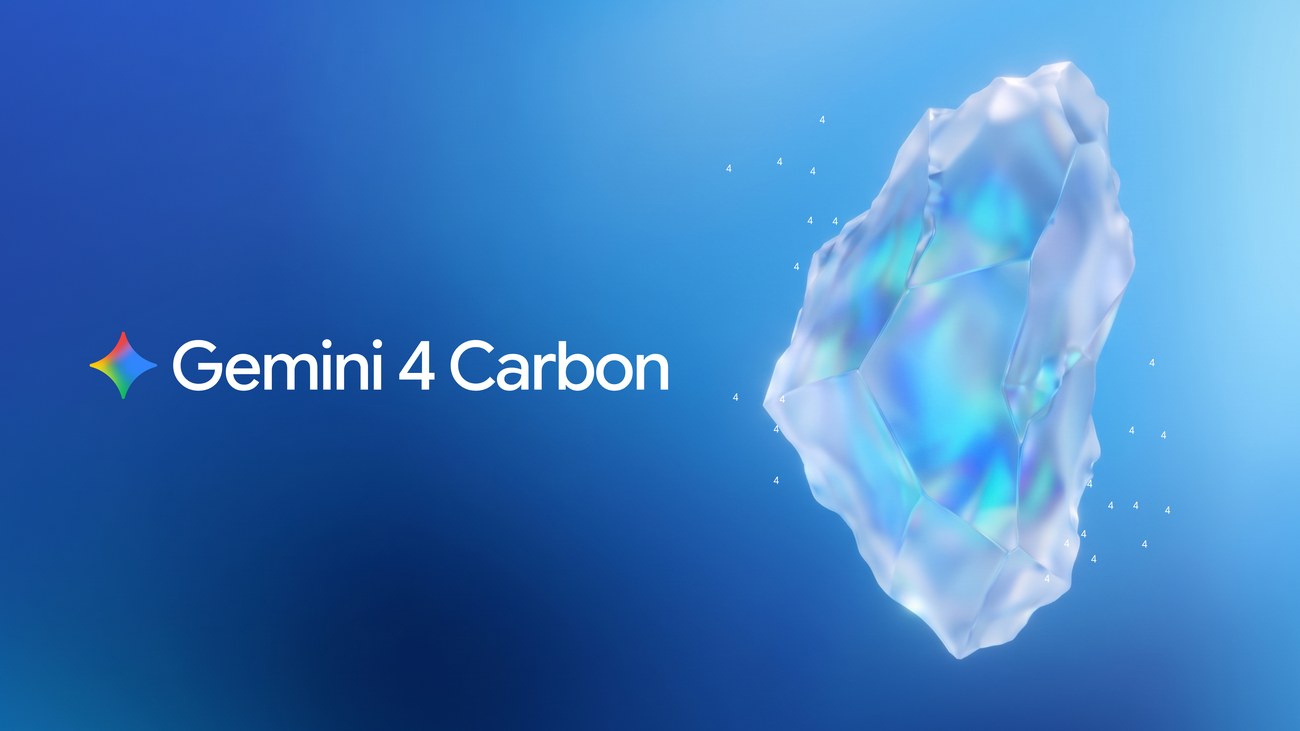
Google DeepMind’s Koray Kavukcuoglu announced Gemini 4 Carbon on Google’s blog on October 28 (1:00 a.m. Manila time on October 29). Google describes it as “our strongest model with state-of-the-art cybersecurity and long horizon capabilities,” built on Gemini 4 Argon, which it launched two weeks earlier.
Who can use it. Google says it is “taking a deliberate approach to rollout” and is taking part in the US government’s voluntary pre-release model testing. Starting this week, Carbon goes to a subset of cyber defenders, and access then widens gradually to other trusted partners through the Fairwind Program. Google says it will keep gathering feedback and working on guardrails “before making Carbon available to developers, businesses, and consumers via our product surfaces as soon as possible.”
What’s not announced yet. Google’s post gives no model ID, release date, context window or rate limits. When we checked at 7:00 a.m. Manila on October 29, the Gemini API models page, pricing page and changelog still listed Gemini 4 Argon (gemini-4-argon) as the newest Gemini 4 model, with no Carbon entry.
Google’s performance claims. These are Google’s own results:
- #1 on version 5.0 of the Artificial Analysis Intelligence Index, with a score of 59.
- 88.2% on SEC-bench Pro for finding vulnerabilities, 54.8% on ExploitGym for exploitation and 71.0% on CWE-bench for patching. Google says these were “evaluated without guardrails.”
- #4 on WebDev Arena at 1768, up 89 Elo points.
- More than twice Argon’s success rate at generating secure code on internal benchmarks.
- 0.0% attack success on Gray Swan’s indirect prompt injection benchmark, against 0.7% for Argon, and about half as many unsupported claims as Argon in internal testing.
Google also says its teams have seen Carbon “run for days” on multi-step engineering tasks, such as tracking down and patching subtle bugs across large codebases. We haven’t seen independent tests yet.
Why it matters
The price is set before the access. Here is how Carbon’s announced prices compare with what the Gemini API charges for Argon today, per million tokens on the paid tier:
| Model | Input | Output | Cached input |
|---|---|---|---|
| Gemini 4 Carbon, introductory | $2.00 | $10.00 | 95% off input |
| Gemini 4 Carbon, after the introductory period | $4.00 | $20.00 | Not stated |
| Gemini 4 Argon, through November 30, 2026 | $2.00 | $10.00 | $0.10 |
| Gemini 4 Argon, from December 1, 2026 | $4.00 | $20.00 | $0.20 |
Google says only that Carbon launches at “the same introductory price” as Argon. It hasn’t said when Carbon’s introductory period ends, so don’t assume Argon’s November 30 cutoff applies to it. If you budget an app on the introductory rate, it could double later. On the standard paid tier, the Gemini API counts thinking tokens as output, so a model that works on a task for longer also costs more per task.
For small teams, the practical news is narrower than the headline. Carbon’s strongest claims are about security work: finding, checking and fixing vulnerabilities. That’s why Google is limiting it to vetted defenders first. If you were hoping to swap it into a coding agent or support bot this week, you can’t, and nothing in Google’s post says when you will. That’s a contrast with OpenAI’s GPT-6.1 Terra, which was in the API with a model ID and price list on its October 26 launch day.
What to do now
- Keep using Argon in production.
gemini-4-argonis the model ID the Gemini API lists today. Don’t hard-code a guessed Carbon model ID; wait for the one Google publishes. - Budget at $4 in and $20 out. Plan Gemini 4 costs at the post-introductory price so a price change doesn’t break your margins. Argon moves to that price on December 1.
- Set spending caps before you switch. If Carbon really does work on tasks for longer, a single agent run could cost more. Our guide to hard spending limits for AI agents covers the settings to check.
- Prepare a test set. Save 20 to 50 of your own past coding or review jobs with known answers, so you can compare Carbon with Argon on your work on the day it opens to developers.
- Watch the Gemini API changelog. Google announced Argon’s model ID there when it became generally available on October 13, so check it for a Carbon entry.
Updates
- Oct 29, 2026, 9:05 a.m. Manila: First published.
Sources & method
Sources
- Google, “Gemini 4 Carbon: our next frontier model,” October 28, 2026
- Google AI for Developers: Gemini API pricing
- Google AI for Developers: Gemini API models
- Google AI for Developers: Gemini API release notes
Method. Last checked October 29, 2026, at 7:00 a.m. Manila time (23:00 UTC on October 28). Access plans, prices and benchmark results come from Google’s announcement; the price after the introductory period is from the post’s footnote. Argon’s prices and model ID, and the absence of a Carbon entry, come from the Gemini API pricing, models and release-notes pages at that time. The budgeting advice and the steps under “What to do now” are our own; we haven’t tested Carbon. No affiliate links on this page. How we work.
Spotted an error? See our corrections policy and tell us.